More work
Stories about things made together
The Iron Thistle brings together design, miniature painting and a community built around the things we make.
Explore the Alex Paints story Back to all work
Helping turn an idea for a small painting competition into The Iron Thistle - a sold-out celebration of miniature art, built from scratch by a small team of painters.
It started with a message asking if I'd run a workshop.
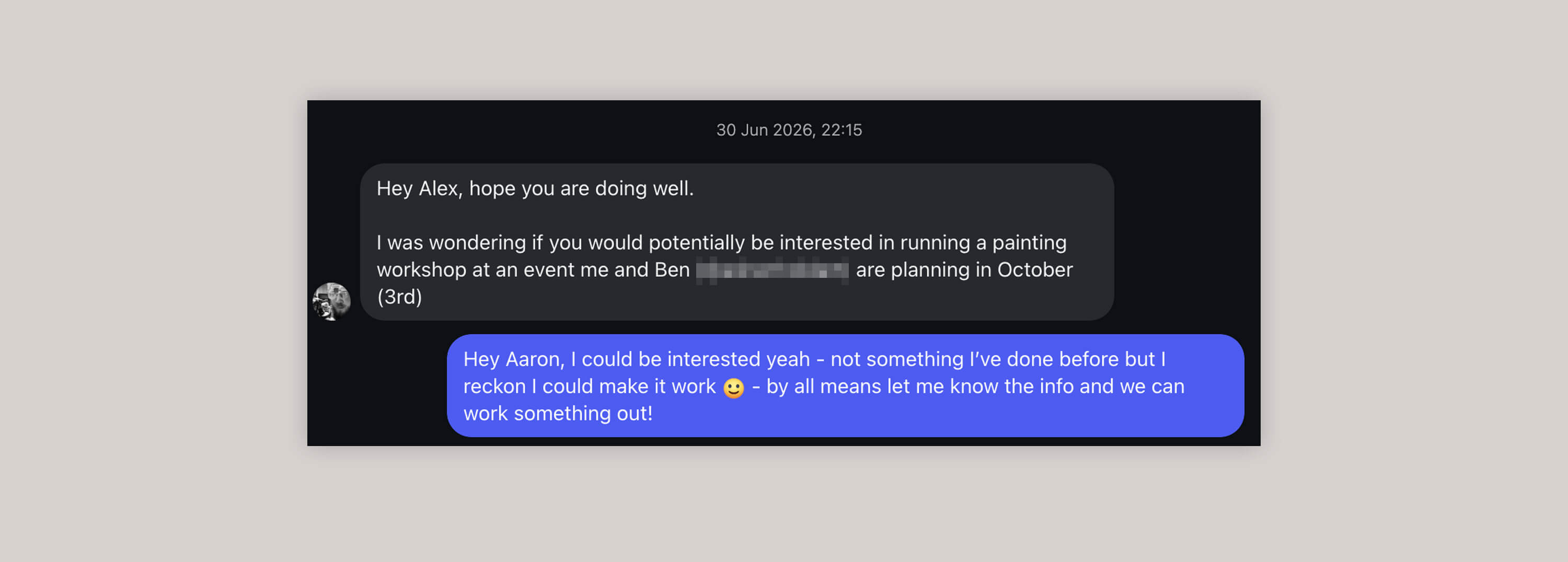
Aaron and Ben, two Scottish painters, had been talking for a while about starting their own miniature-painting competition. They'd seen I was due to judge at the Convergence painting competition in Bristol, knew I was Scottish, and got in touch.
At that point they had an idea, a date, and a venue that could hold about 40 people.
The more we talked about it, the more obvious it became that this was exactly the sort of thing I'd like to help make.
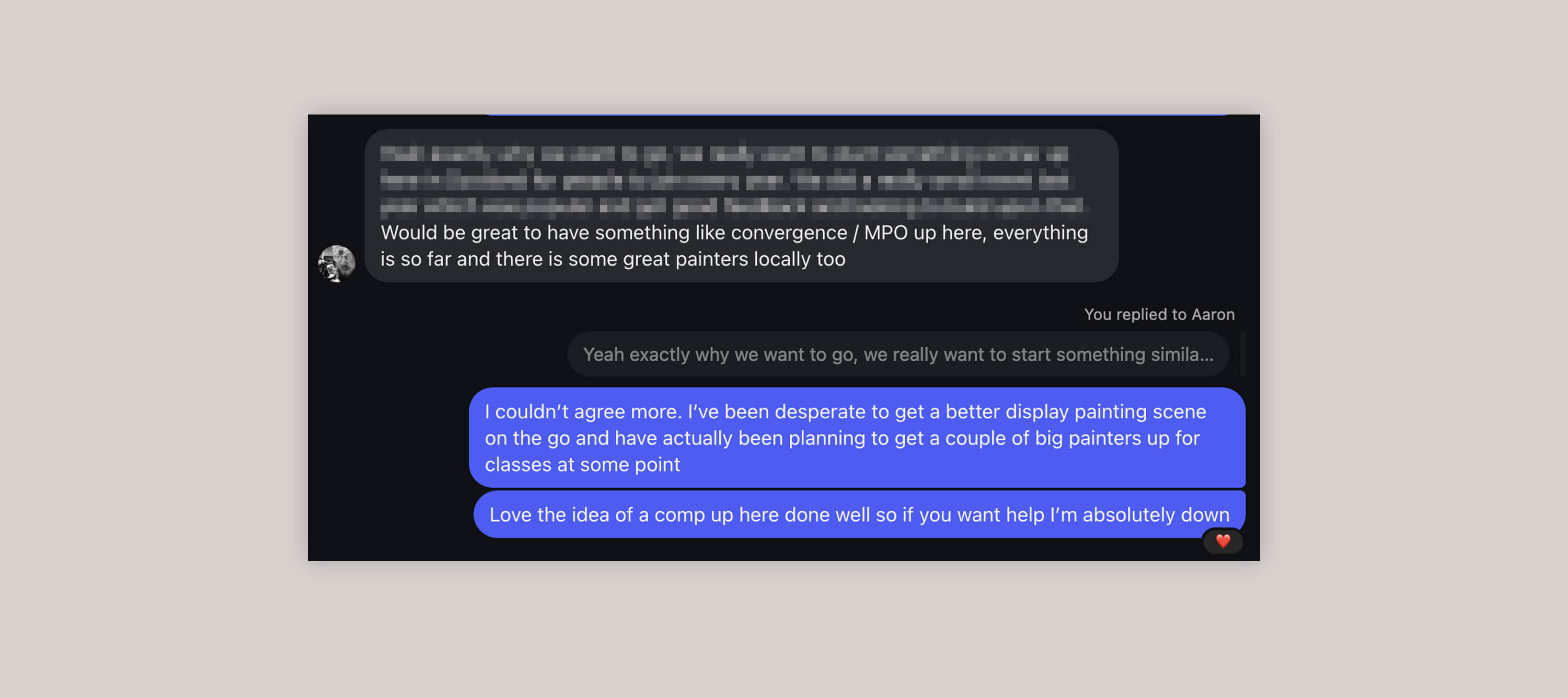
So I joined them.
There are plenty of brilliant hobby conventions and gaming events around the UK.
We wanted something slightly different.
The Iron Thistle would be built around miniature painting itself - not a gaming convention with a painting competition tucked into one corner.
A place for display painters to compete, learn, get feedback, meet other painters and spend a day surrounded by people who cared about this weird little art form as much as they did.
And importantly, we wanted Scotland to have an event capable of earning a place alongside established UK competitions like Fen Model Show, MPO and Salute.
Something painters would deliberately put in their competition calendar.
With no previous event to photograph, no archive and no established visual language, the identity had to do a lot of the early work.
We knew it should feel Scottish without disappearing into the usual pile of kilts, Saltires and Highland clichés.
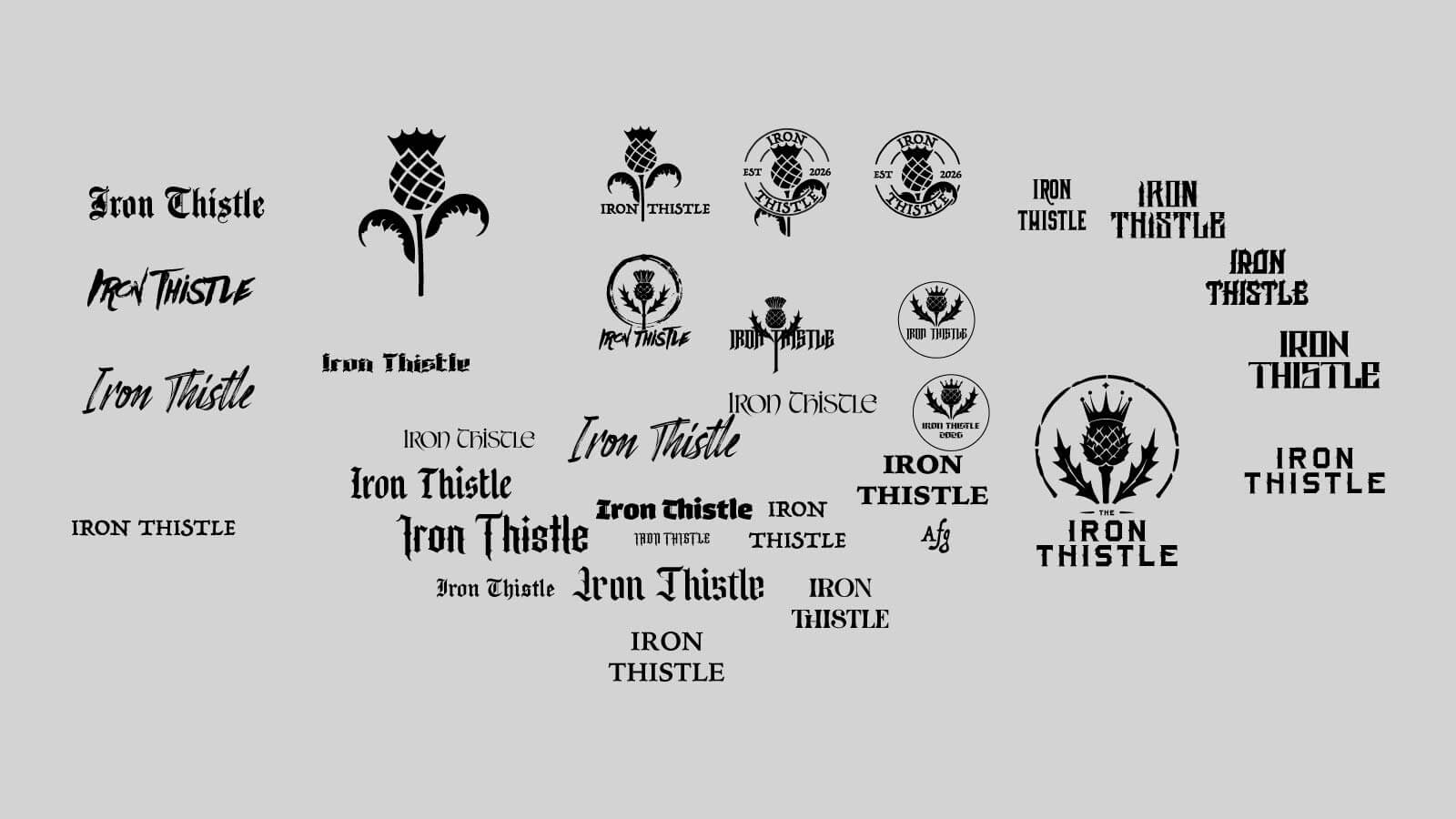
Early explorations pulled from fantasy typography, heraldry and the shapes of the thistle itself.
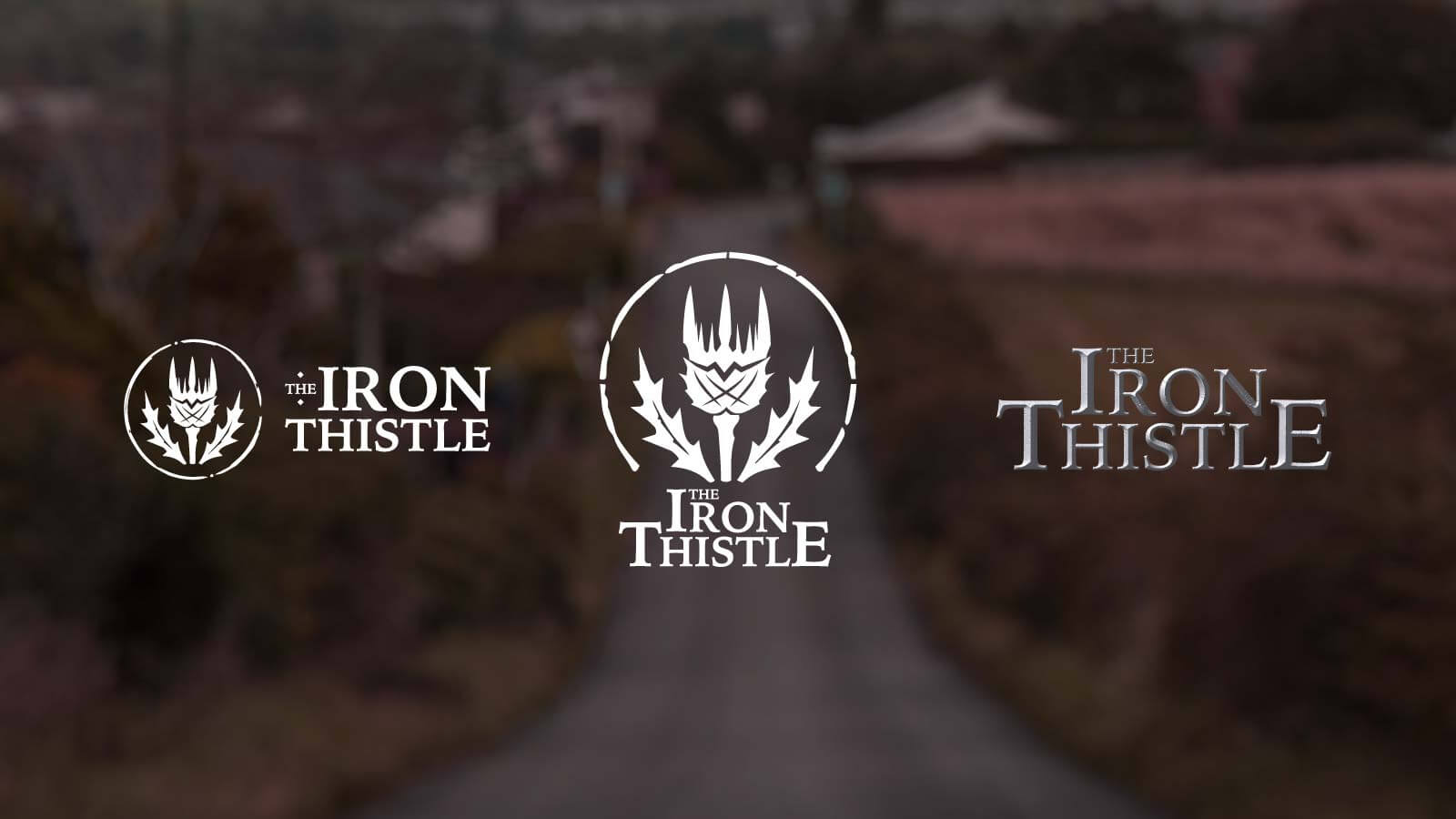
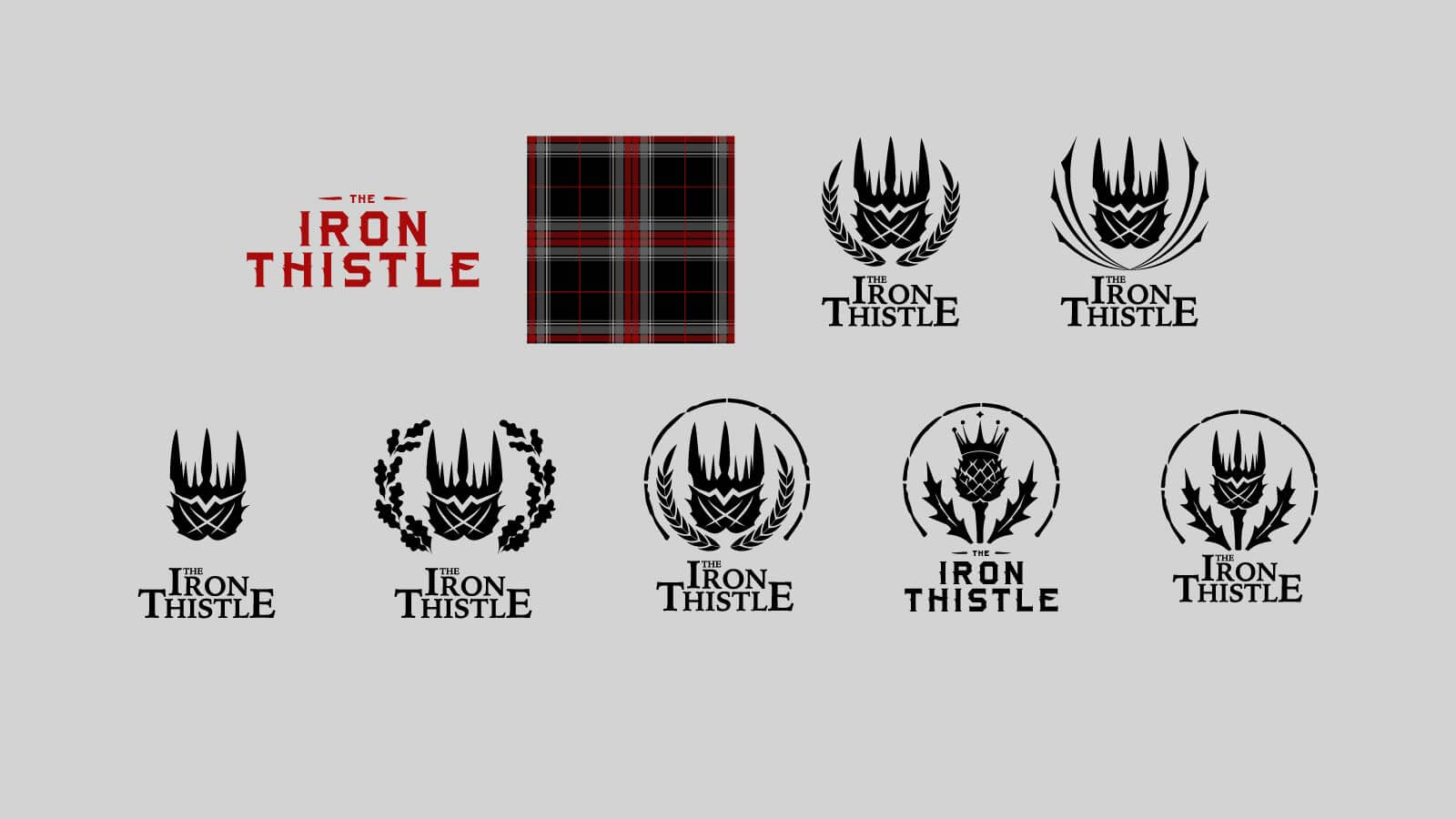
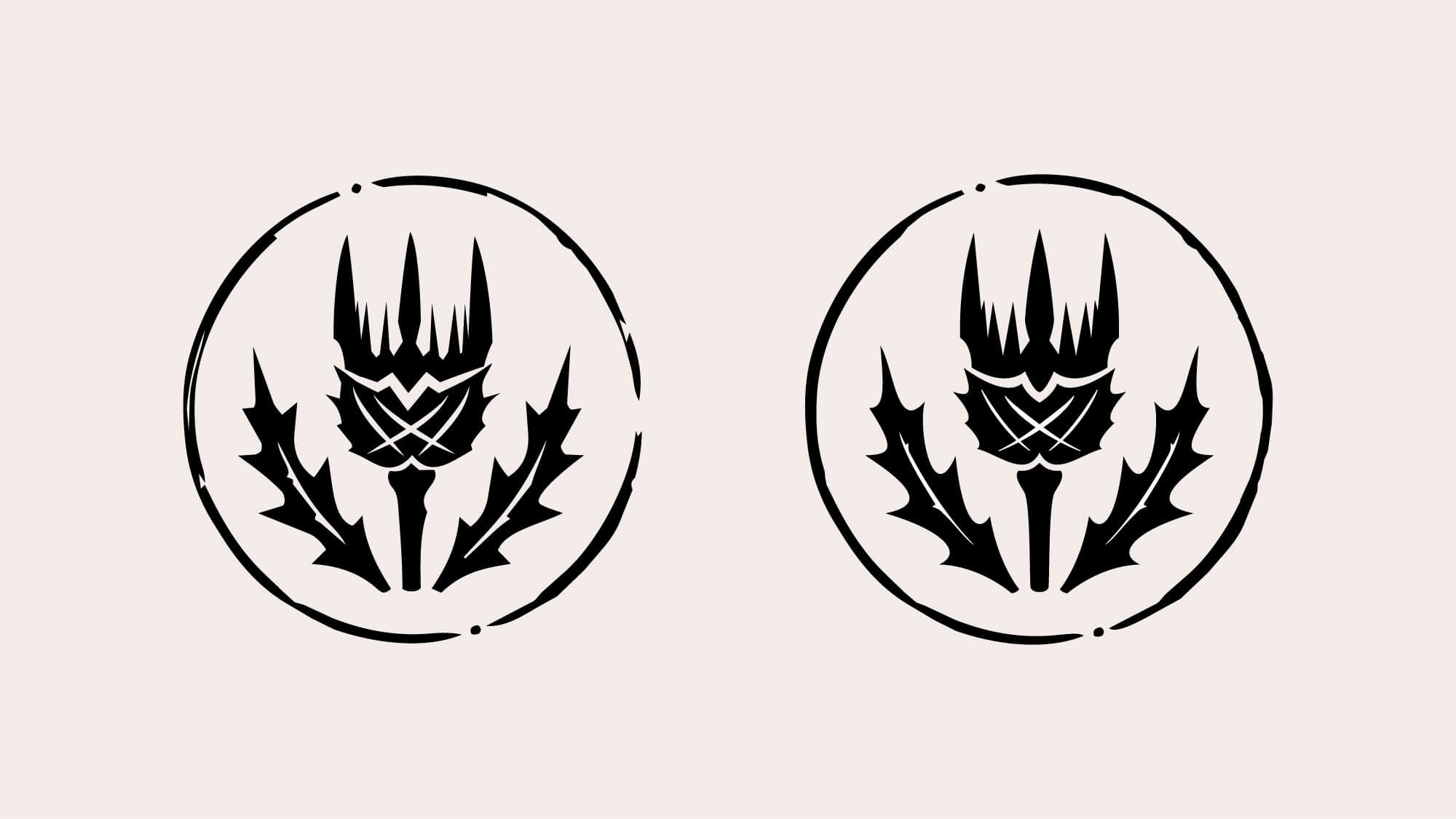
Eventually we landed on an identity built around a strong, stylised thistle and crown - something that could work as an event mark, but also survive being stamped, printed, pinned, engraved and cast into physical objects.
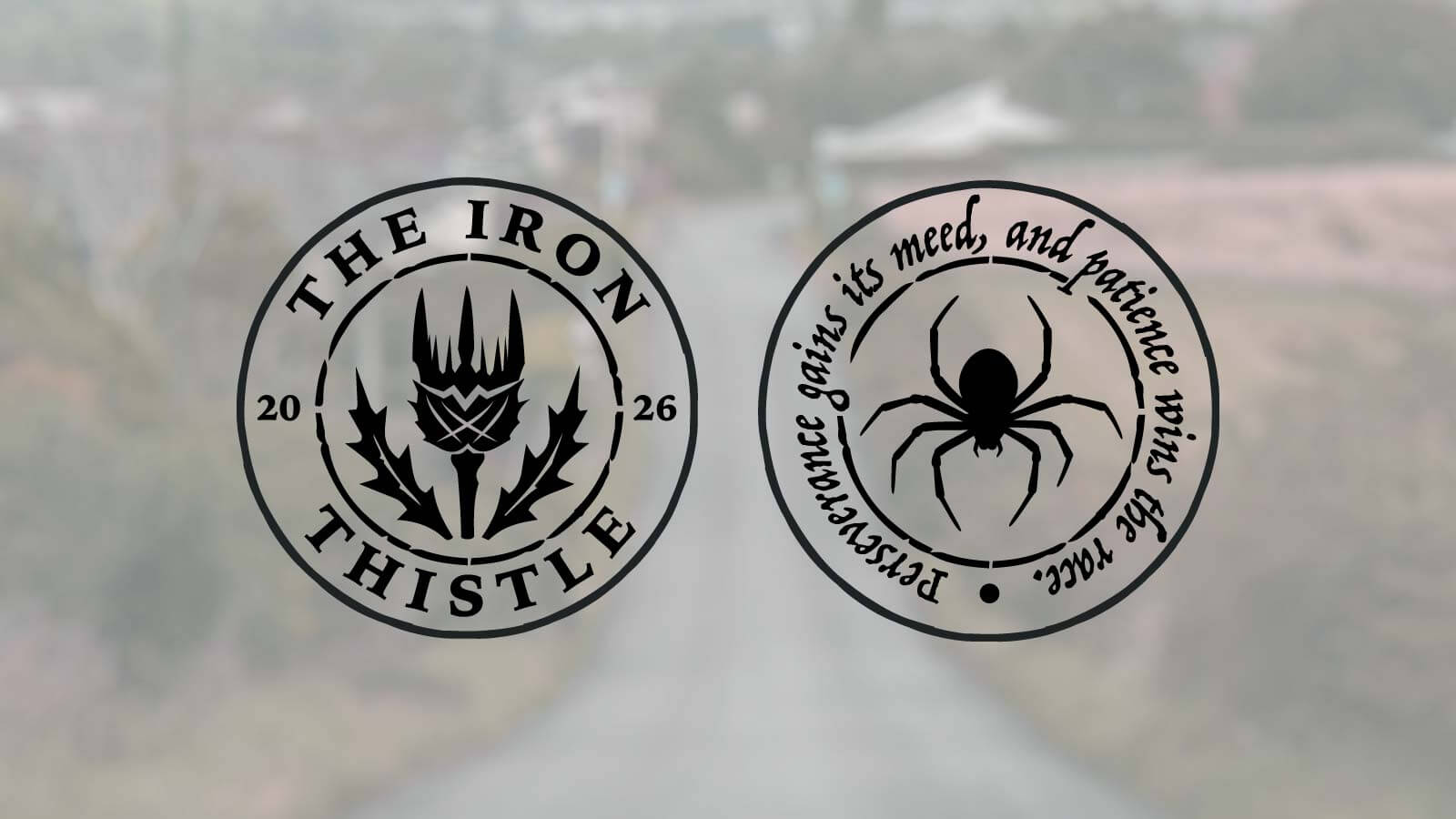
Robert the Bruce supposedly watched a spider repeatedly attempt to rebuild its web while he was hiding in a cave.
It failed. Tried again. Failed. Tried again. And eventually succeeded.
Whether the story happened quite like that isn't really the important bit.
As a Scottish story about perseverance, it felt surprisingly appropriate for miniature painting - a hobby largely built around repeatedly attempting something incredibly difficult until it finally looks slightly less shit.
So the spider became a secondary part of the Iron Thistle world.
Not something plastered over the main identity, but a detail we could discover uses for.
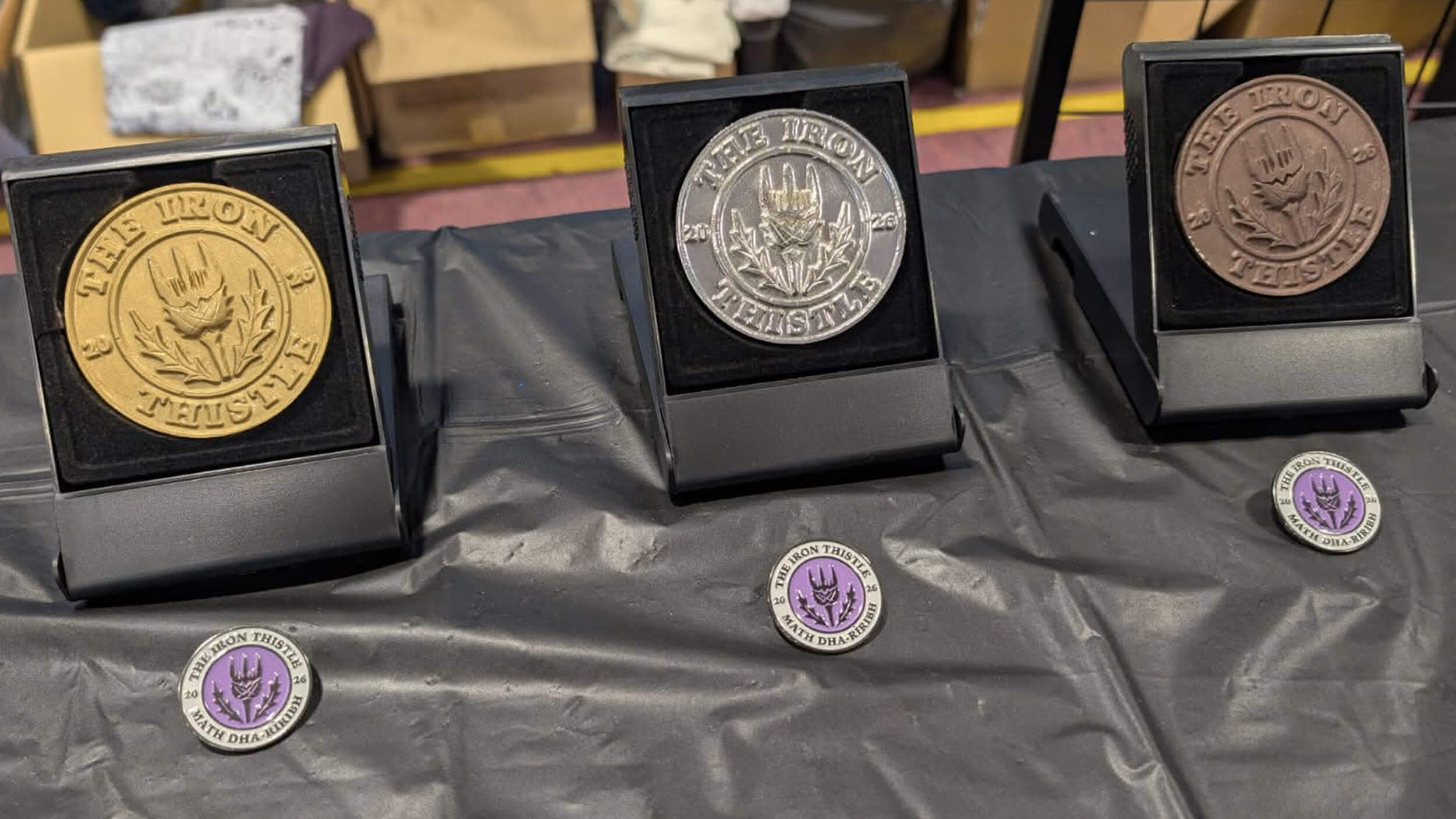
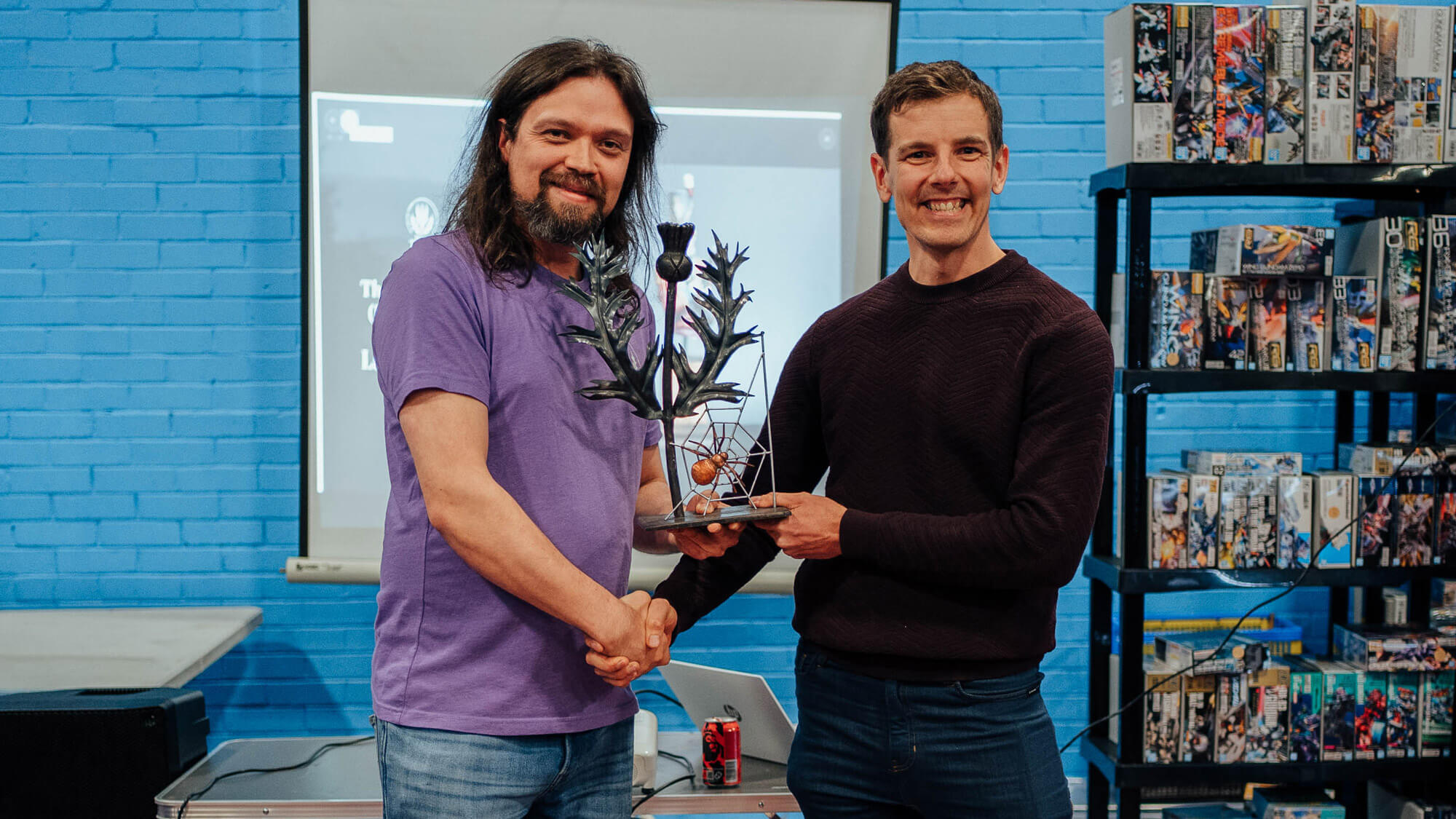
It appeared on the reverse of the medals and eventually made its way onto the first Best in Show trophy.
Which is particularly unfortunate considering I'm terrified of spiders.
Promoting the first event presented a fairly obvious problem.
There was no previous Iron Thistle.
No photographs of packed tables. No previous winners. No testimonials.
No evidence whatsoever that the five of us actually knew how to run an event.
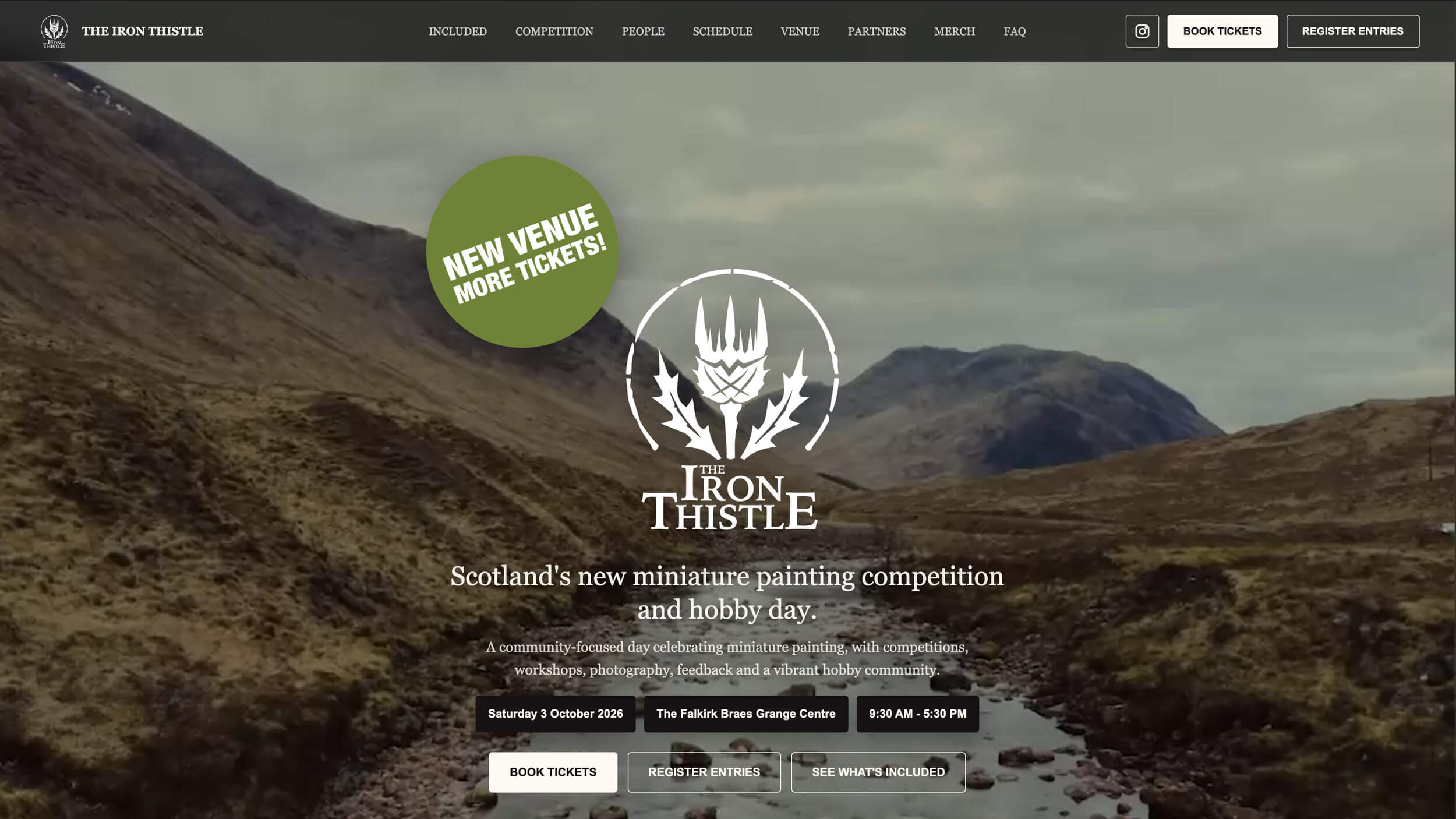
The website and identity had to create enough confidence for people to buy a ticket anyway.
I designed, built and hosted the site, while the wider team collaborated on the content and details behind it.
The aim wasn't to make the event seem enormous. It was to make it feel considered.
If somebody was thinking about travelling to Scotland, entering their first competition or spending a full day with us, they shouldn't have to hunt around social media to work out what was going on.
Once somebody bought a ticket, the design problem didn't stop.
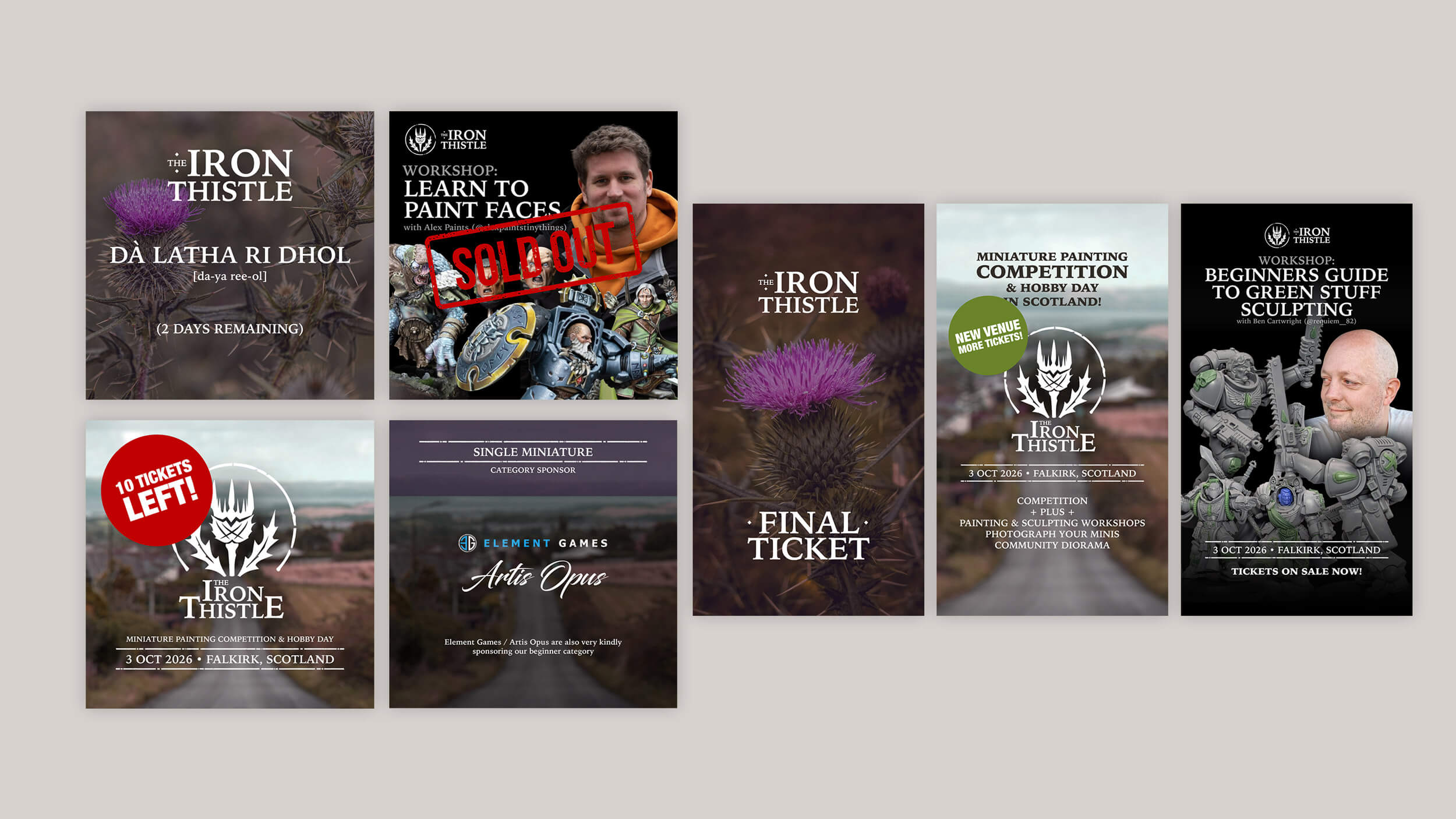
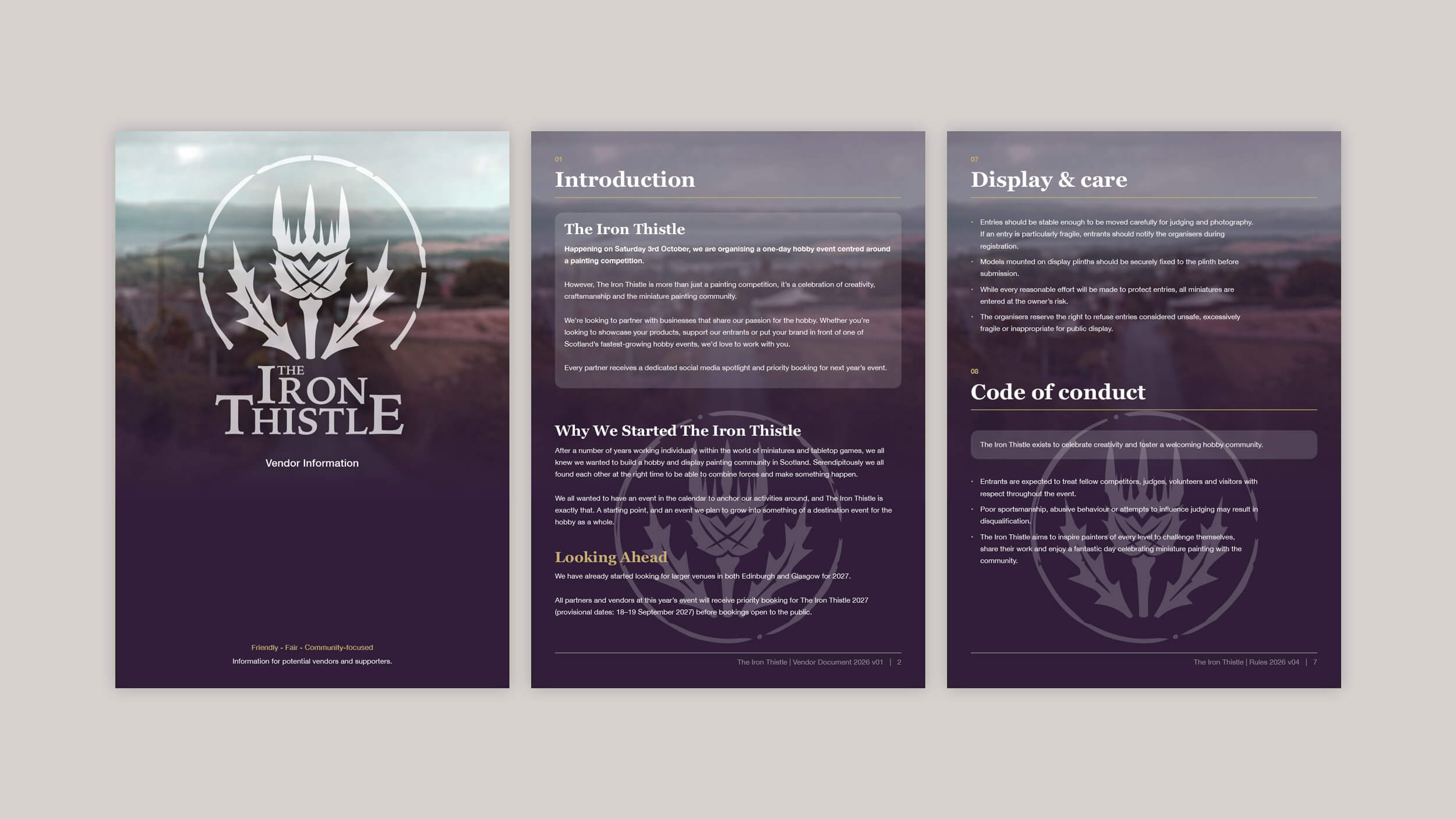
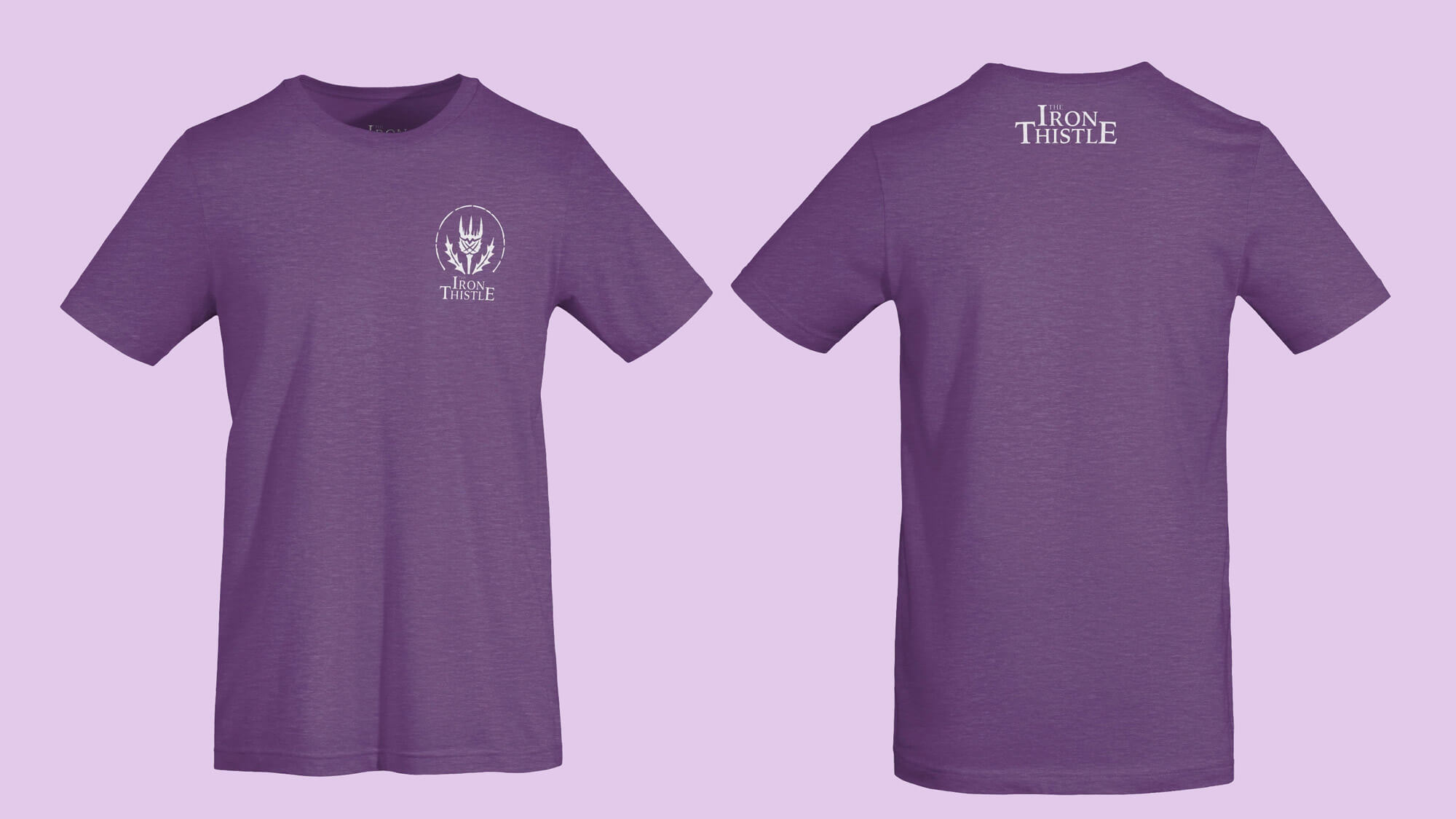
I worked across most of the visual touch-points around the event:
Entry cards. Signage. Vendor information packs. Emails. Social graphics. Pins. Medals. Event information.
And all the assorted bits of communication that nobody notices when they're working properly.
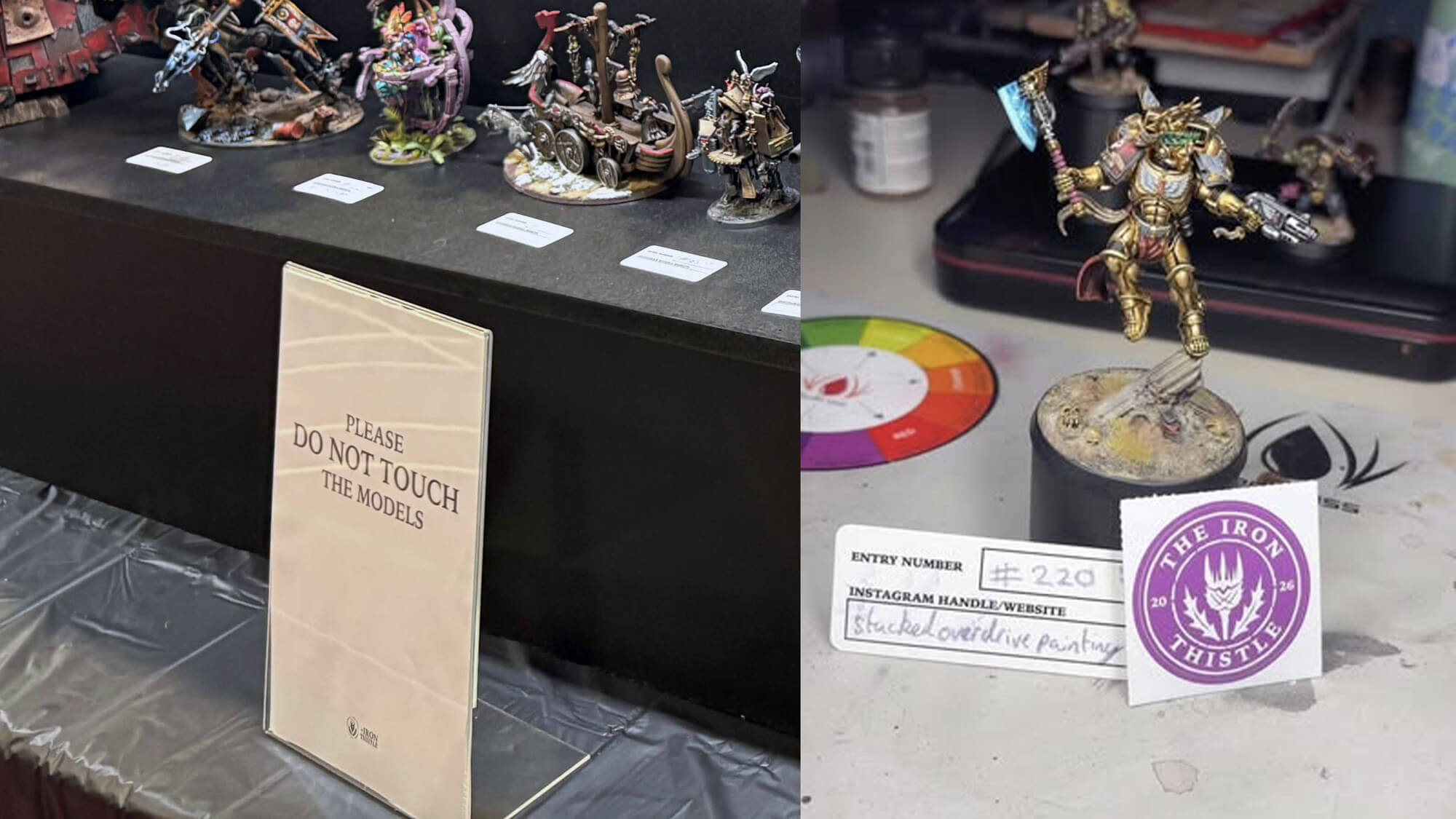
A painting competition creates a surprising amount of information.
Entrants. Categories. Miniatures. Judges. Scores. Awards. Results. Stats. And eventually an awards presentation containing all of them.
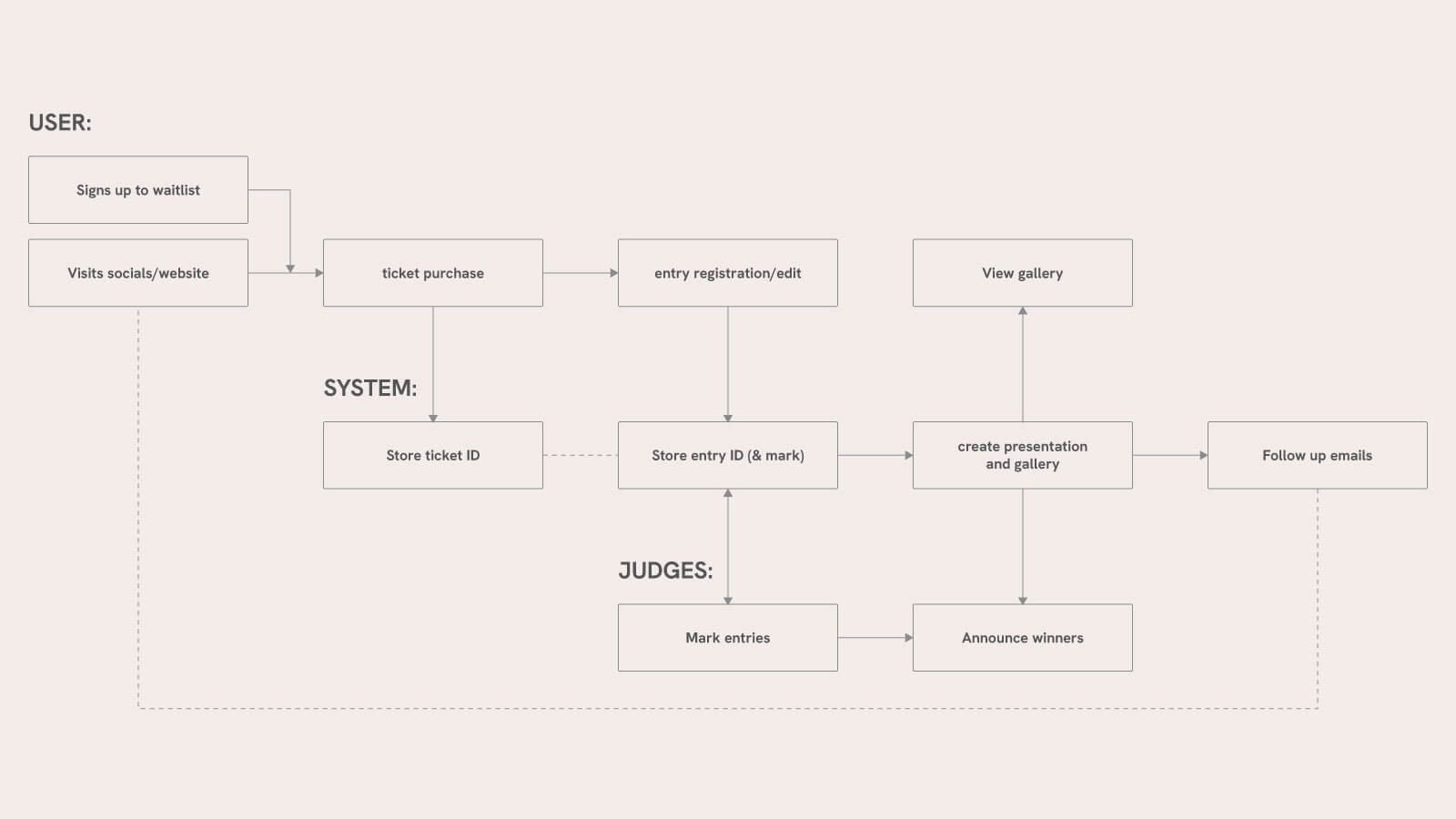
So we designed and built our own registration system.
It records competition entries, becomes the portal used during judging, handles the resulting awards data and can even generate the presentation for the awards ceremony.
For 2027 we're exploring how much further we can integrate that with ticketing without making something that's currently very easy, unnecessarily complicated.
And it sold out.
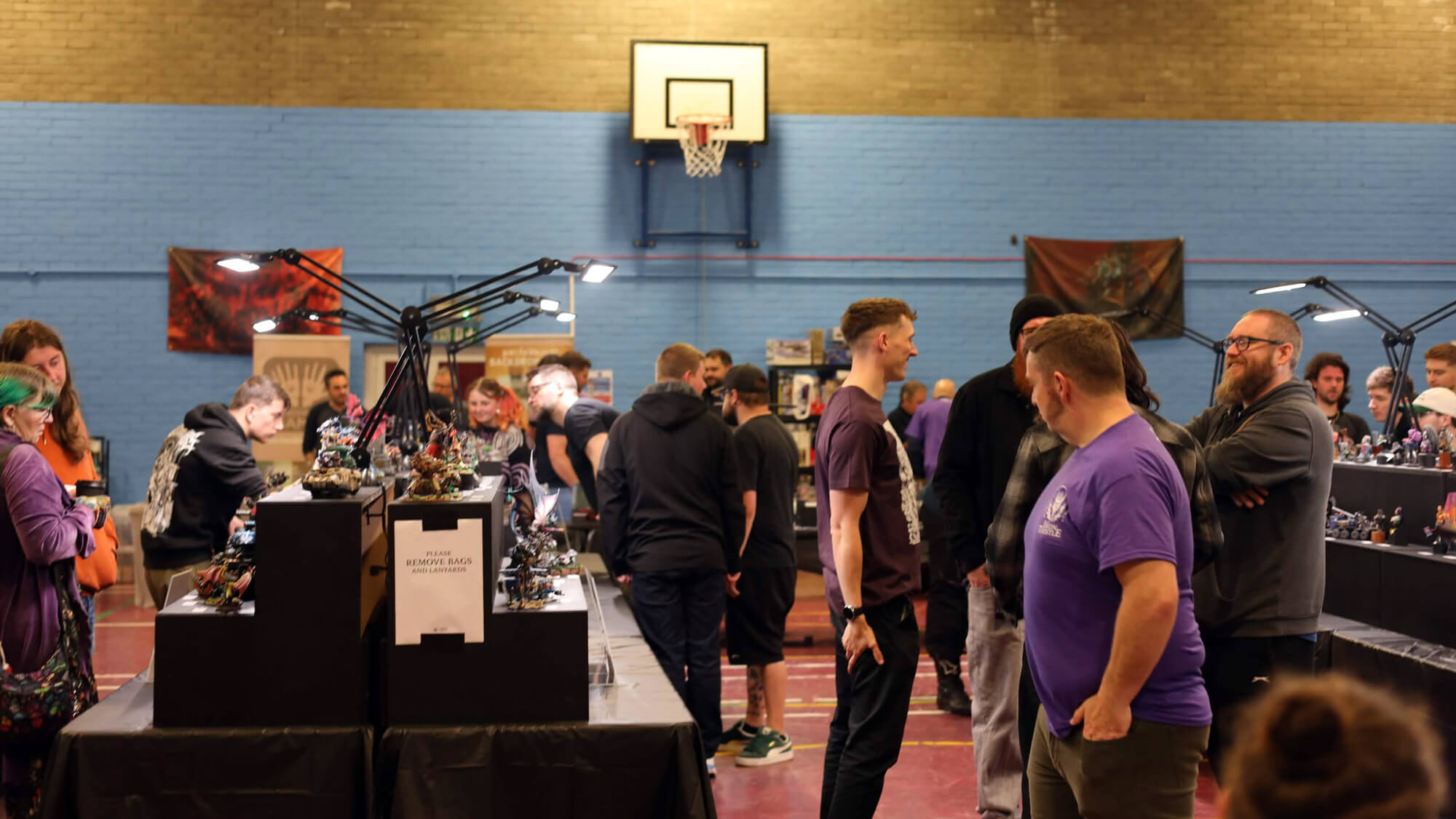
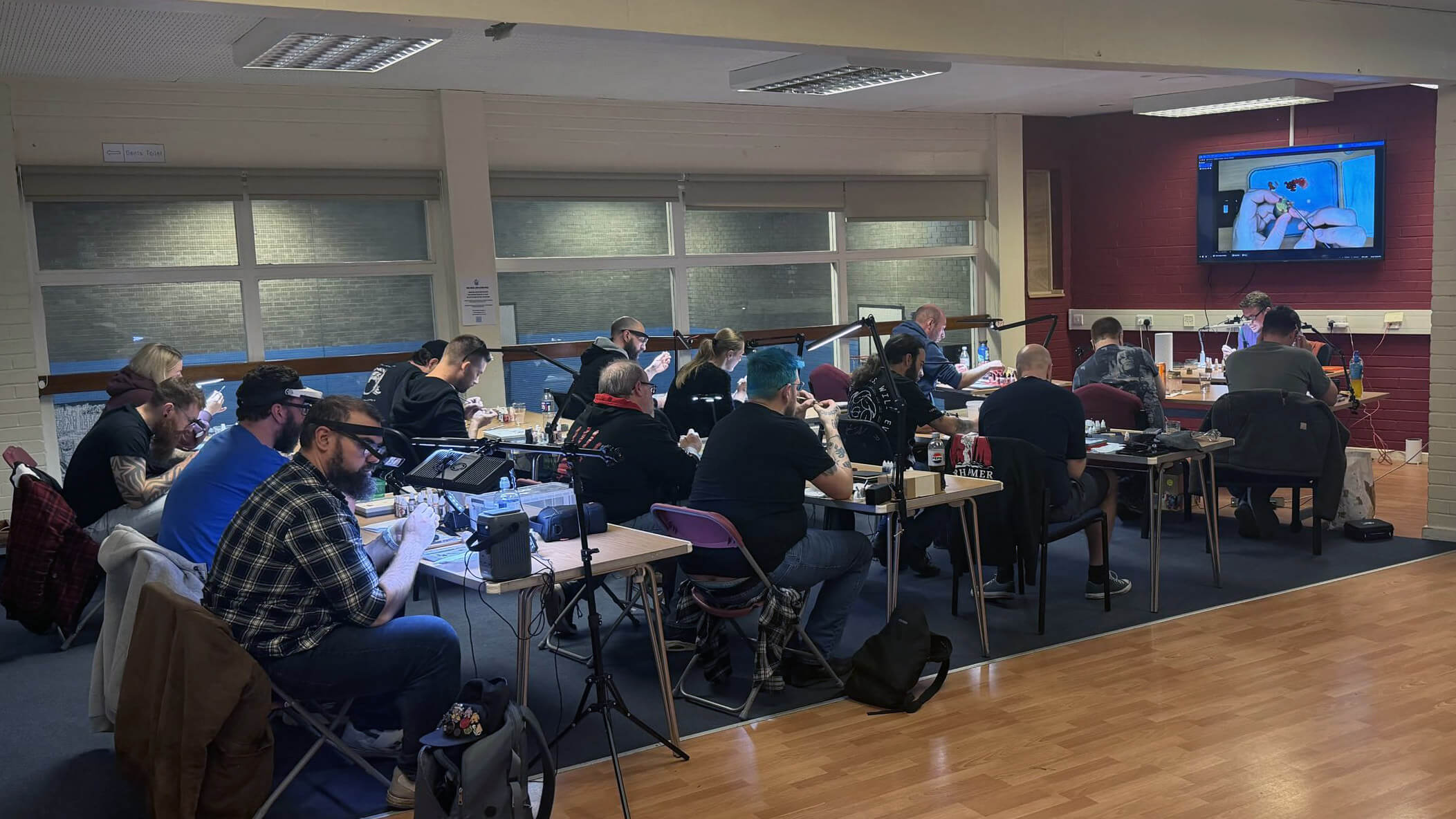
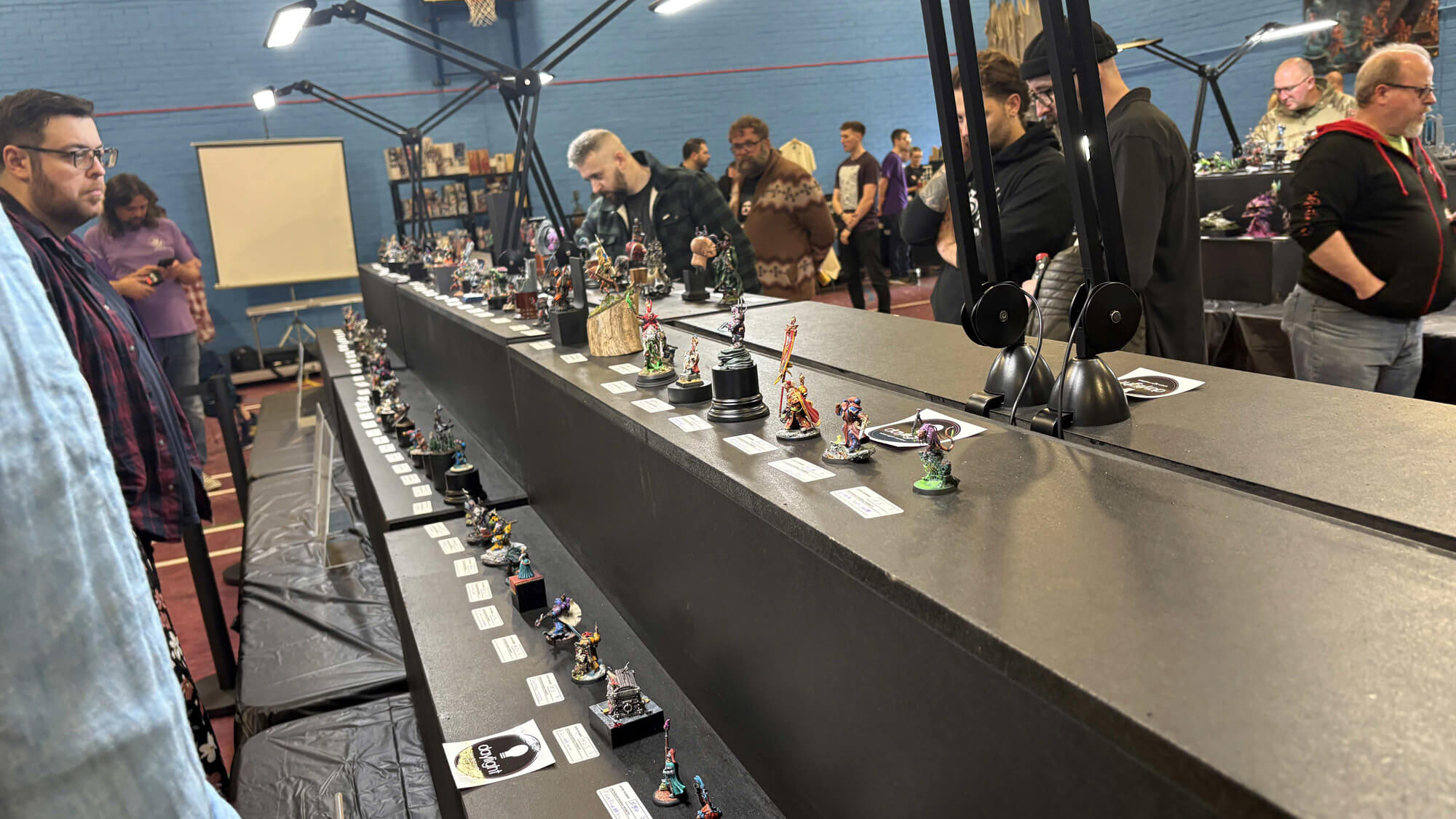
People travelled from across the country. The competition tables filled up. Workshops ran throughout the day. Vendors came along.
Painters who'd never entered a competition before put their work alongside experienced display painters.
And the thing we'd spent months looking at through spreadsheets, websites, PDFs, boxes and very long evenings became an actual event full of actual people.


Afterwards, we asked everyone what they thought.
We surveyed visitors and vendors, allowed anonymous responses, thought carefully about avoiding leading questions and incentivised people to actually tell us what hadn't worked.
Fortunately, they mostly told us we'd done a pretty good job.
A recurring piece of feedback was that The Iron Thistle didn't feel like a first-time event.
Vendors have already committed to returning. People who've travelled want to come back, and when we started talking about it at other painting competitions, people already knew what The Iron Thistle was.
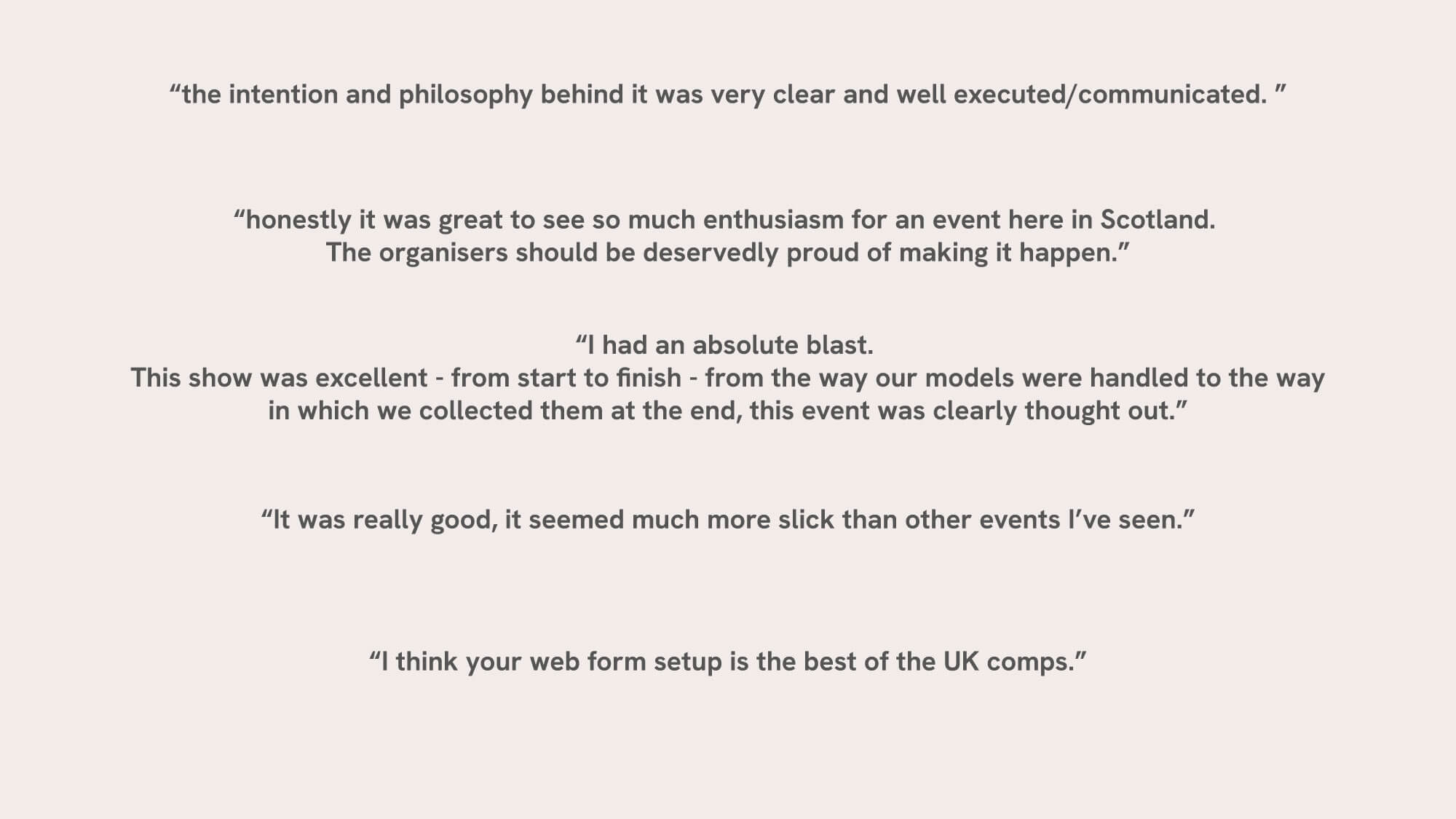 Real survey responses from actual attendees.
The first Iron Thistle was never supposed to be the finished version.
Feedback from the event is already shaping the next one. We're refining categories and judging. I'm tightening parts of the identity that didn't survive scrutiny at every scale.
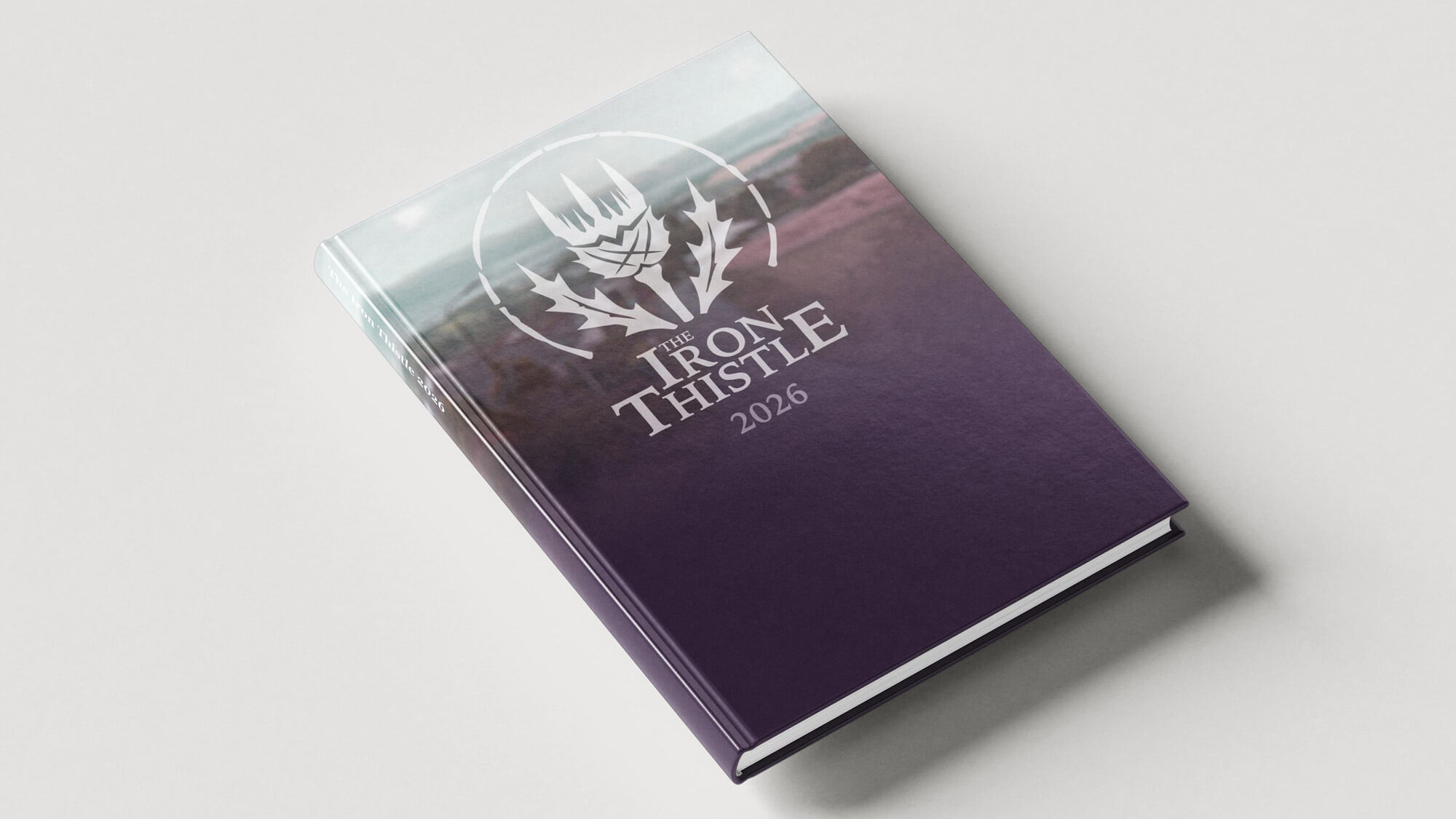
We're developing a printed annual documenting the competition, every single entry and the winning work too.
And for 2027, The Iron Thistle is expanding to two days.
That gives visitors more time together and, importantly, gives us the opportunity to judge the competition properly without trying to cram everything into a few frantic hours.
This time I'll be moving from running a workshop to joining the judging team myself.
The Iron Thistle isn't mine.
It's something we've built together - initially a group of painters and sculptors with different skills, supported by friends, volunteers, vendors, sponsors and a painting community that decided to give a brand-new event a chance.
My part has been helping give that idea a visual identity, turning information into something people can navigate, building the digital pieces we needed and bringing what I've learned from years of design - and a few years of attending painting competitions - into the experience.
The first event sold out. The feedback was overwhelmingly positive and we're already building the next one. The ambition is pretty simple:
Make The Iron Thistle a genuine celebration of miniature art - and give painters a reason to put Scotland in their competition calendar.
The Iron Thistle brings together design, miniature painting and a community built around the things we make.
Explore the Alex Paints story Back to all work